
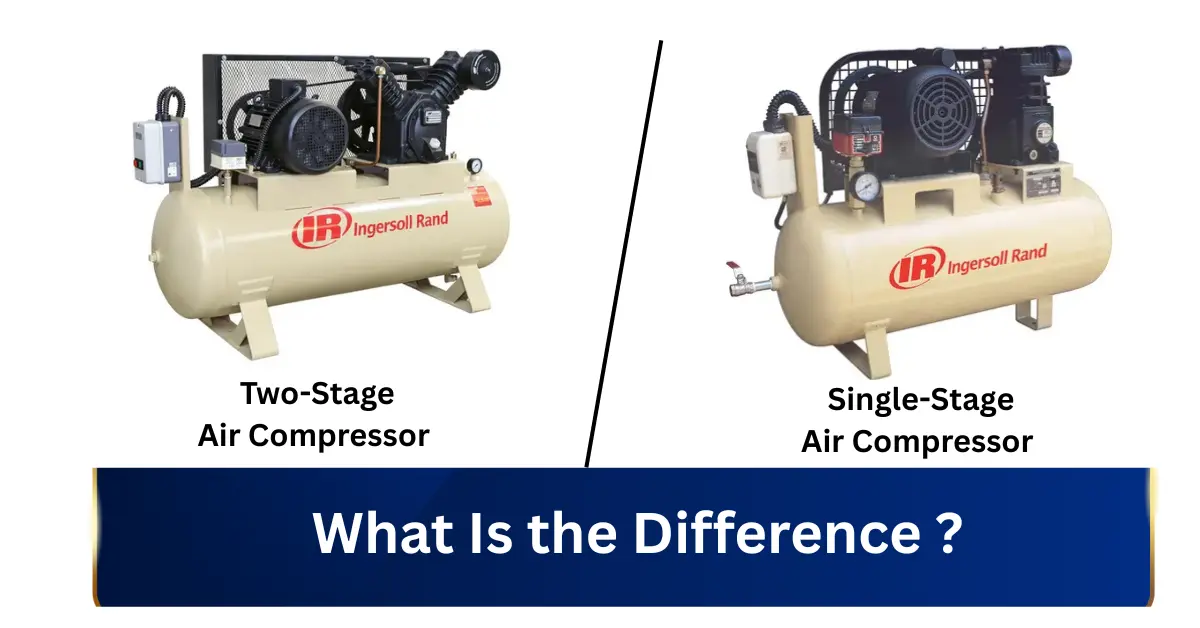
Choosing the right industrial air compressor is essential for improving productivity, reducing energy costs, and ensuring reliable compressed air supply. One of the most common questions buyers ask is: Should I choose a single stage or two stage air compressor?
While both compressor types use reciprocating piston technology, they differ in how they compress air, their pressure capabilities, efficiency, and ideal applications. Understanding these differences will help you select the best compressor for your workshop, manufacturing facility, or industrial operation.
Key Takeaways
- Single-stage air compressors compress air once and are ideal for light to medium-duty applications.
- Two-stage air compressors compress air twice, delivering higher pressure and greater efficiency.
- Single-stage compressors typically operate up to 125 PSI, while two-stage models can reach 175 PSI or higher.
- Two-stage compressors are better suited for continuous industrial use and demanding pneumatic applications.
What Is a Single Stage Air Compressor?
A single stage air compressor compresses air in one piston stroke before sending it directly to the storage tank.
How It Works
- Atmospheric air enters the cylinder through the intake valve.
- The piston compresses the air in a single stroke.
- The compressed air moves into the receiver tank for storage.
Because air is compressed only once, these compressors are simple, reliable, and cost-effective.
Advantages
- Lower purchase cost
- Compact design
- Easy maintenance
- Energy efficient for intermittent use
- Portable options available
Best Applications
Single-stage compressors are ideal for:
- Automotive garages
- Woodworking shops
- Small manufacturing units
- Spray painting
- DIY workshops
- General pneumatic tools
What Is a Two Stage Air Compressor?
A two stage air compressor compresses air in two separate stages to achieve higher pressure and improved efficiency.
How It Works
- Air enters the first cylinder and is compressed.
- The compressed air passes through an intercooler where it cools down.
- The air enters a smaller second cylinder for additional compression.
- High-pressure air is stored in the receiver tank.
This additional compression stage produces more compressed air while generating less heat.
Advantages
- Higher operating pressure
- Better energy efficiency
- Cooler operation
- Longer duty cycles
- Increased reliability for continuous use
Best Applications
Two-stage compressors are commonly used in:
- Manufacturing plants
- Pharmaceutical industries
- Food processing facilities
- Automotive production lines
- Heavy engineering workshops
- Large industrial compressed air systems
Single Stage vs. Two Stage Air Compressor: Key Differences
Feature | Single Stage | Two Stage |
Compression Process | One compression cycle | Two compression cycles |
Maximum Pressure | Up to 125 PSI | 175 PSI or higher |
Energy Efficiency | Good | Excellent |
Duty Cycle | Intermittent operation | Continuous operation |
Cooling System | Standard cooling | Intercooler between stages |
Initial Investment | Lower | Higher |
Maintenance | Simple | Moderate |
Best For | Small workshops | Industrial facilities |
Which Air Compressor Is More Energy Efficient?
For occasional use, a single-stage compressor consumes less power and provides excellent value.
However, for continuous industrial operations, a two-stage air compressor is significantly more efficient. The intercooling process reduces heat buildup, allowing the compressor to produce higher pressure with less energy consumption.
Over time, the lower operating costs often offset the higher initial investment.
How to Choose the Right Air Compressor
When selecting between a single-stage and two-stage air compressor, consider the following factors:
Choose a Single Stage Air Compressor If:
- You need air pressure below 125 PSI.
- Your tools operate intermittently.
- You have a limited budget.
- Portability is important.
- You own a small workshop or garage.
Choose a Two Stage Air Compressor If:
- Your facility operates continuously.
- Multiple pneumatic machines run simultaneously.
- You require higher CFM and PSI.
- Energy efficiency is a priority.
- You want long-term industrial performance.
Maintenance Tips
Regardless of the compressor type, regular
air compressor maintenance improves performance and extends equipment life.
Best practices include:
- Replace air filters regularly
- Check oil levels
- Inspect belts and valves
- Drain moisture from the receiver tank
- Repair air leaks immediately
- Schedule preventive maintenance inspections
Proper servicing reduces downtime and helps maintain maximum efficiency.
Conclusion
Both single-stage and two-stage air compressors offer reliable compressed air solutions, but the best choice depends on your operational requirements.
If you need an affordable compressor for light-duty applications, a single stage air compressor is an excellent option. If your business demands continuous operation, higher pressure, and better energy efficiency, investing in a two stage air compressor will provide superior long-term performance.