
Introduction
Industrial air compressors are essential machines that power a wide range of manufacturing and industrial processes. Choosing the right compressor requires understanding the different technologies, performance factors, and application requirements. This comprehensive guide explores everything you need to know about industrial air compressors, including:
- What is an Industrial Air Compressor?
- Types of Industrial Air Compressors
- Types of Air Compressor Controls
- Types of Air Compressor Drives
- Air Compressor Performance Specifications
- How to Choose the Right Industrial Air Compressor
- Industries and Applications of Industrial Air Compressors
What is an Industrial Air Compressor?
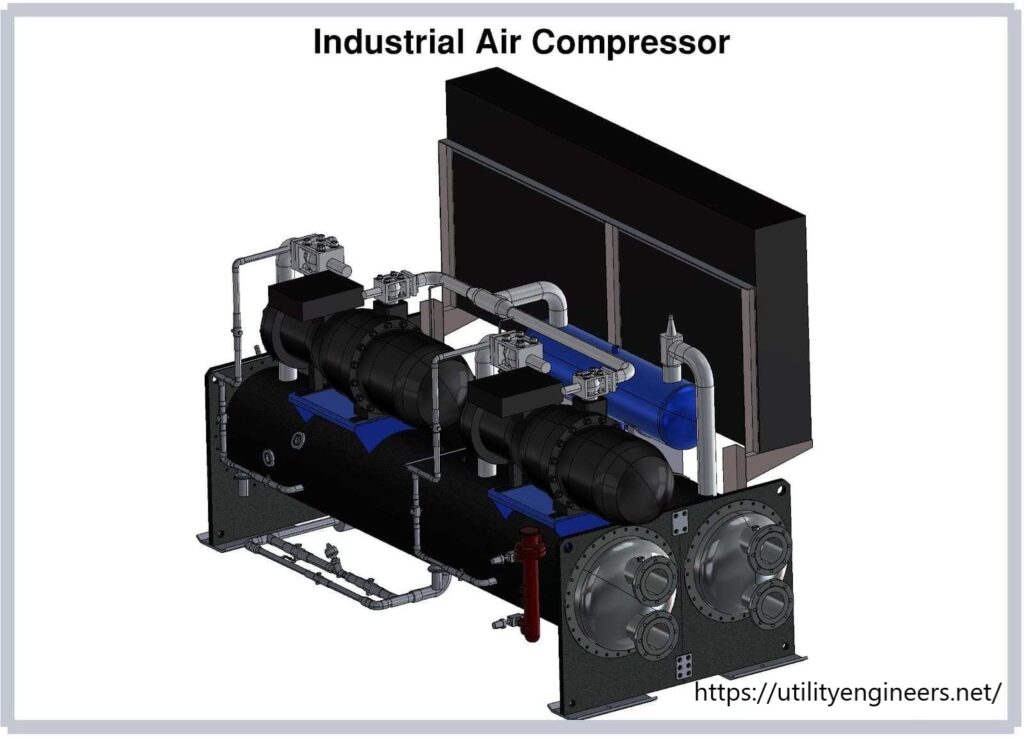
An industrial air compressor is a machine designed to increase the pressure of gases, with air being the most commonly compressed medium. In manufacturing, processing, and other heavy industrial environments, industrial air compressors play a vital role by providing a continuous and dependable supply of compressed air for daily operations. Different types of industrial compressors are used across various industries to perform tasks such as:
- Supplying instrument air and shop air
- Powering pneumatic tools, sandblasting equipment, and paint spray systems
- Compressing refrigerants used in refrigeration and air conditioning systems
- Transporting gases through industrial pipelines
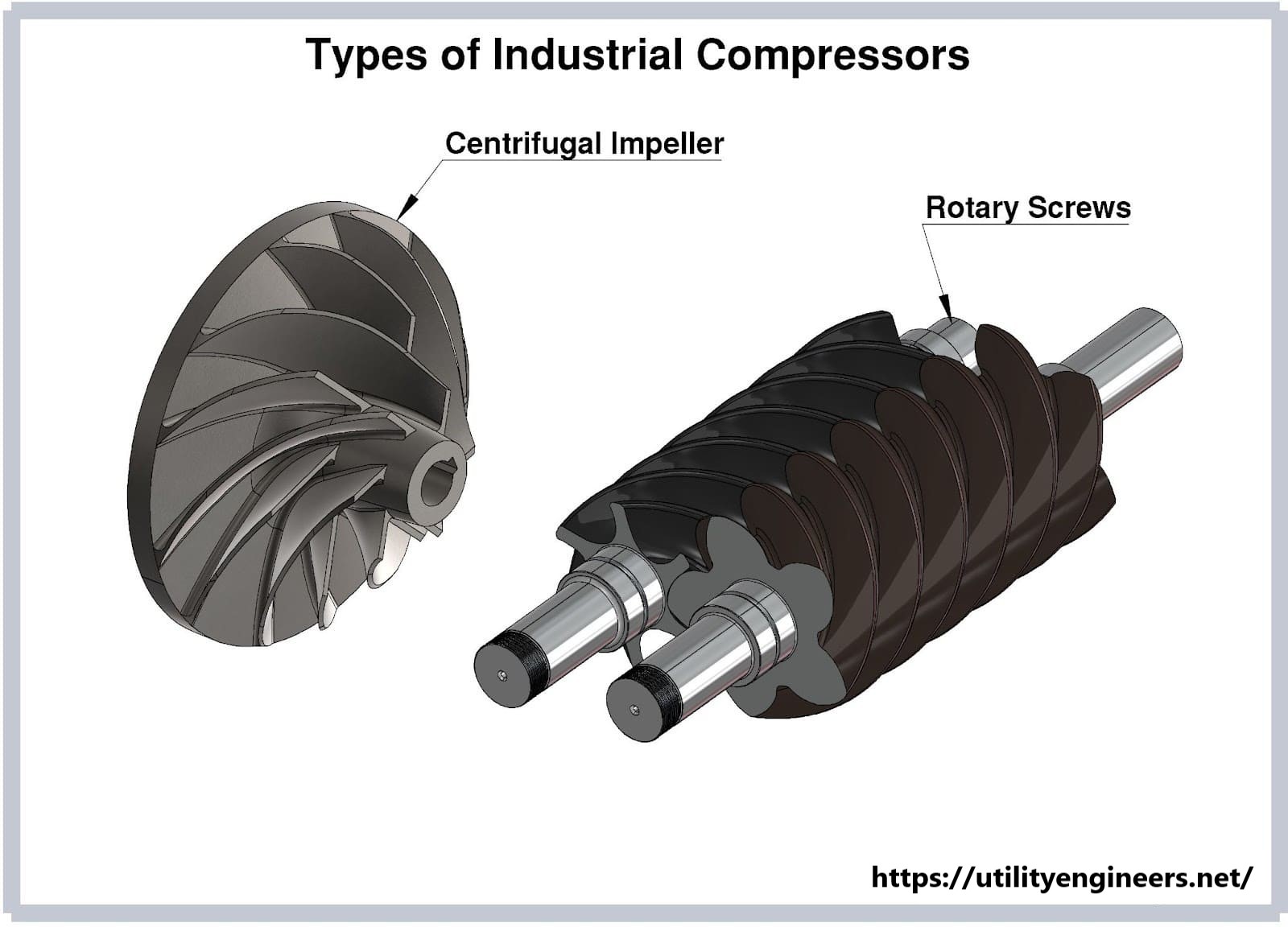
Like pumps, industrial air compressors are broadly classified into two main types: positive displacement and centrifugal (dynamic or kinetic) compressors. While most pumps use centrifugal technology, the majority of industrial compressors operate on the positive-displacement principle. Common types include rotary screw compressors, reciprocating compressors, and centrifugal compressors, each designed to meet specific airflow, pressure, and continuous-duty requirements.
Industrial air compressors are available in a wide range of sizes, from compact portable units for inflating tires to large turbo compressors used in heavy industrial and pipeline applications. When selecting a compressor, important factors include horsepower (HP), airflow capacity (CFM), operating pressure (PSI), tank size, energy efficiency, maintenance needs, and whether the compressor is oil-lubricated or oil-free.
How Air Generates Power
Air compression works by increasing air pressure above atmospheric levels, which requires energy input. When compressed air is released, it naturally expands back to normal pressure, converting the stored energy into useful mechanical power. Industrial air compressors utilize this principle by storing potential energy in compressed air for a wide range of applications. Unlike many other power sources, compressed air can be used directly without additional energy conversion at the point of use. As a result, pneumatic tools powered by compressed air deliver excellent power-to-weight and power-to-volume performance, making them highly efficient for industrial operations.
Although compressed air cannot match the speed of electricity or the force of hydraulic systems, it offers exceptional versatility across industrial applications. It is widely preferred because of its reliability, efficiency, and cost-effectiveness. In many manufacturing facilities, compressed air powers automation systems, material handling equipment, production lines, packaging machines, and plant-wide air distribution while ensuring consistent performance.
One of the key advantages of compressed air is the high level of control it provides without the electrical shock risks or fire hazards associated with certain power systems. However, safe operation requires compliance with industry standards, including proper pressure regulation, leak detection, moisture removal, and routine compressor maintenance to maximize efficiency, air quality, and equipment uptime.
Active Air and Energy Air
Compressed air is generally classified into two categories: active air and energy air.
Active air refers to compressed air that comes into direct contact with products. It is commonly used in food and beverage processing, pharmaceutical manufacturing, electronics, and chemical industries. In these applications, clean compressed air is essential, making air filtration, dryers, and contamination control critical for maintaining product quality and meeting industry standards.
Energy air is compressed air used to store and transmit power for mechanical operations. It is primarily used to operate pneumatic tools, machinery, and automated equipment in factories, workshops, and industrial facilities where stable airflow and consistent pressure are essential for reliable performance.
What Are the Different Types of Industrial Air Compressors?
Industrial air compressors convert mechanical power into potential energy by compressing air for industrial use. They are widely used in manufacturing plants, automotive workshops, food and beverage processing, chemical industries, and many other industrial sectors. For applications up to 30 horsepower, the most commonly used compressor types are rotary compressors and reciprocating compressors, with each using a different compression method to meet specific airflow, pressure, and operational requirements.
Reciprocating (Piston) Air Compressors
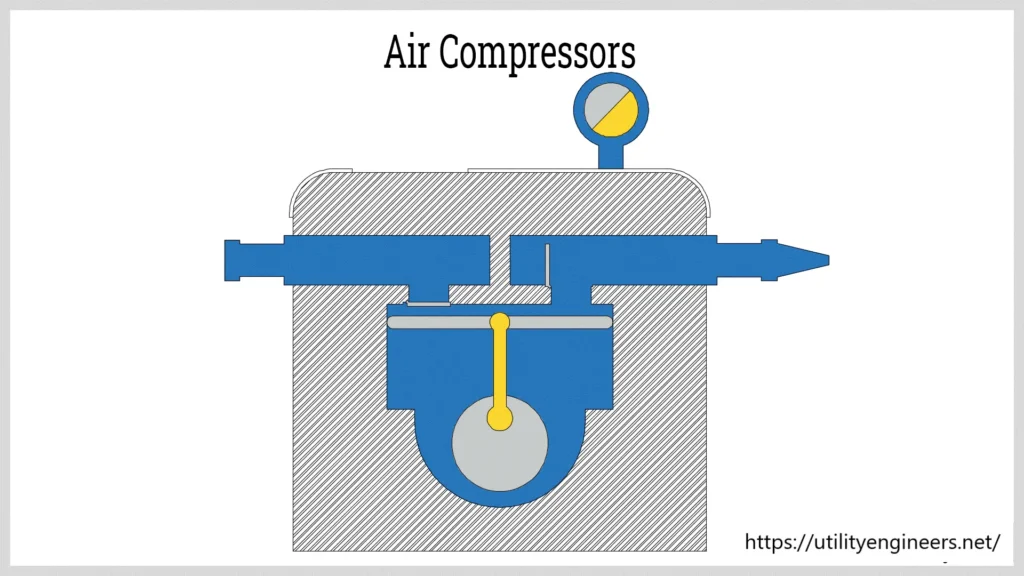
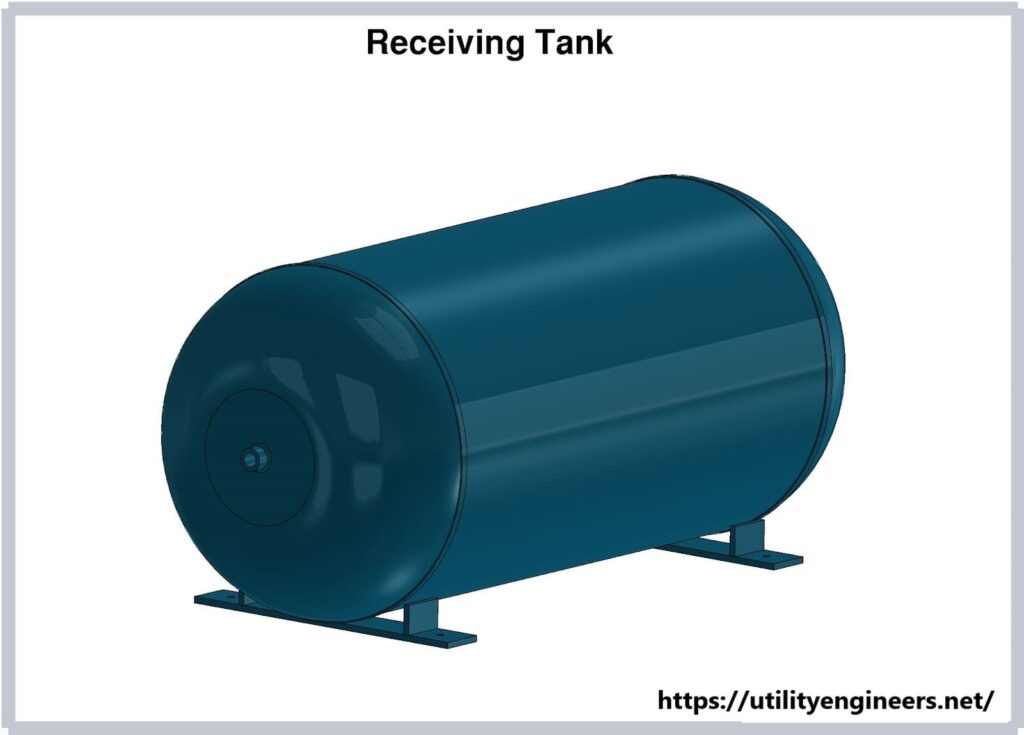
Reciprocating (piston) air compressors work by using the back-and-forth movement of pistons inside cylinders to compress air. The compressed air is then discharged through valves and stored in a high-pressure receiver tank for later use. Most piston compressor systems are available as complete units with the compressor and air receiver mounted together, providing easier installation, improved efficiency, and reliable performance.
In addition to powering pneumatic tools and industrial equipment, reciprocating compressors are widely used in natural gas pipeline applications for gas transportation. When selecting a piston air compressor, key factors include airflow capacity (SCFM), operating pressure (PSI), duty cycle, and whether the compressor is oil-lubricated or oil-free. Oil-free reciprocating compressors are particularly important in industries such as food processing, pharmaceuticals, healthcare, and electronics, where clean, contaminant-free compressed air is essential for maintaining product quality and meeting industry standards.
Main Types of Industrial Air Compressors
Industrial air compressors are mainly divided into the following categories:
Reciprocating Air Compressors
- Reciprocating diaphragm compressors
- Reciprocating single-acting compressors
- Reciprocating rocking piston compressors
Rotary Air Compressors
- Rotary helical screw compressors
- Rotary sliding vane compressors
- Rotary scroll compressors
These major compressor categories are designed to meet a wide variety of commercial and industrial applications. Each type offers distinct advantages in terms of energy efficiency, operating pressure, duty cycle, maintenance requirements, installation space, operating costs, and compressed air delivery.
Reciprocating Single-Acting Compressors
Reciprocating single-acting compressors are available in both single-stage and two-stage configurations, making them suitable for low- and medium-pressure applications. A single-stage compressor draws atmospheric air into the cylinder and compresses it to the required pressure in a single piston stroke. These compressors typically operate within a pressure range of 70 PSI to 135 PSI, making them ideal for automotive workshops, woodworking shops, garages, and light industrial applications.
For applications requiring higher air pressure, such as metal fabrication, industrial painting, and heavy equipment maintenance, a two-stage reciprocating compressor is the preferred choice. In this design, air is first compressed to an intermediate pressure, cooled through an intercooler, and then compressed again in the second stage. This process improves efficiency, lowers operating temperatures, reduces moisture formation, and delivers a more stable air supply for demanding workloads.
Multi-piston reciprocating compressors are generally designed to operate on a cyclic duty cycle rather than continuously. This operating method helps prevent overheating, extends compressor life, and improves overall reliability. In addition, finned cylinder heads and effective air-cooling systems dissipate excess heat, improving energy efficiency and ensuring consistent performance during long operating hours.
Most single-stage and two-stage reciprocating compressors use an oil-lubricated system to reduce friction and ensure smooth piston operation. However, oil-free reciprocating compressors are also available for applications requiring clean, contaminant-free compressed air. These compressors eliminate the risk of oil carryover into the air stream, making them ideal for industries such as food processing, pharmaceuticals, healthcare, and electronics where high air purity is essential.
Reciprocating Rocking Piston Compressors
Reciprocating rocking piston compressors are a specialized type of piston compressor that generate compressed air through the reciprocating motion of a rocking piston connected to a single-piece rod. This unique design allows the piston to move with a slight rocking action during compression, resulting in a compact, lightweight, and highly efficient compressor suitable for portable and space-saving applications.
Many rocking piston compressors use non-metallic, low-friction piston rings that require little or no lubrication. This oil-free design eliminates the risk of oil contamination, reduces maintenance requirements, and delivers clean compressed air. With moderate pressure capabilities, rocking piston compressors are widely used in medical equipment, laboratory instruments, analytical devices, portable air systems, and off-grid applications where compact size, reliable performance, and oil-free operation are essential.
Reciprocating Diaphragm Compressors
Reciprocating diaphragm compressors produce clean, oil-free compressed air by flexing a durable diaphragm driven by an eccentric mechanism. As the diaphragm moves back and forth, it changes the compression chamber volume, creating positive displacement and increasing air pressure. Since the compressed air remains completely separated from the moving mechanical parts and lubrication system, the risk of oil contamination is virtually eliminated. This makes diaphragm compressors an excellent choice for laboratory equipment, medical gas systems, specialty gas applications, and industries where high air purity is essential.
Their oil-free operation also makes them widely used in pharmaceutical, chemical, and electronics manufacturing, where even small amounts of oil contamination can affect product quality. Although diaphragm compressors are known for exceptional reliability and clean air delivery, they generally provide lower airflow and moderate pressure, making them best suited for precision and light-duty applications.
Rotary Sliding Vane Compressors
Rotary sliding vane compressors use an eccentrically mounted rotor inside a cylindrical housing fitted with sliding vanes. As the rotor turns, centrifugal force pushes the vanes against the inner wall of the stator, creating sealed air chambers. The decreasing chamber volume compresses the incoming air and delivers a smooth, continuous flow without pressure pulsations. Unlike reciprocating compressors, rotary vane compressors provide steady compressed air, making them ideal for applications requiring consistent airflow, including bulk material handling, printing, pneumatic controls, and the transfer of powders such as cement and chemicals.
These compressors typically operate within a pressure range of 60 PSI to 200 PSI and are designed for reliable, continuous operation. Their oil-injected design reduces wear, minimizes vibration, and extends service life, making them a dependable solution for many industrial environments.
Multi-stage rotary vane compressors further improve efficiency and maintain stable air pressure for medium-duty industrial applications. While the oil-lubricated compression process offers excellent performance and durability, these compressors are not suitable for applications requiring completely oil-free air. However, their enclosed design helps minimize leakage and contamination, providing reliable operation in demanding industrial settings.
Key Benefits of Rotary Sliding Vane Compressors
Rotary sliding vane compressors are widely valued for their dependable performance and operational efficiency. Their key advantages include:
- Continuous, pulse-free airflow for pneumatic tools and automation systems
- High air output with excellent energy efficiency
- Low operating noise and minimal vibration
- Long service life with reduced maintenance requirements
- Cost-effective compressed air supply for material handling and bulk conveying applications
Rotary Helical Screw Compressors
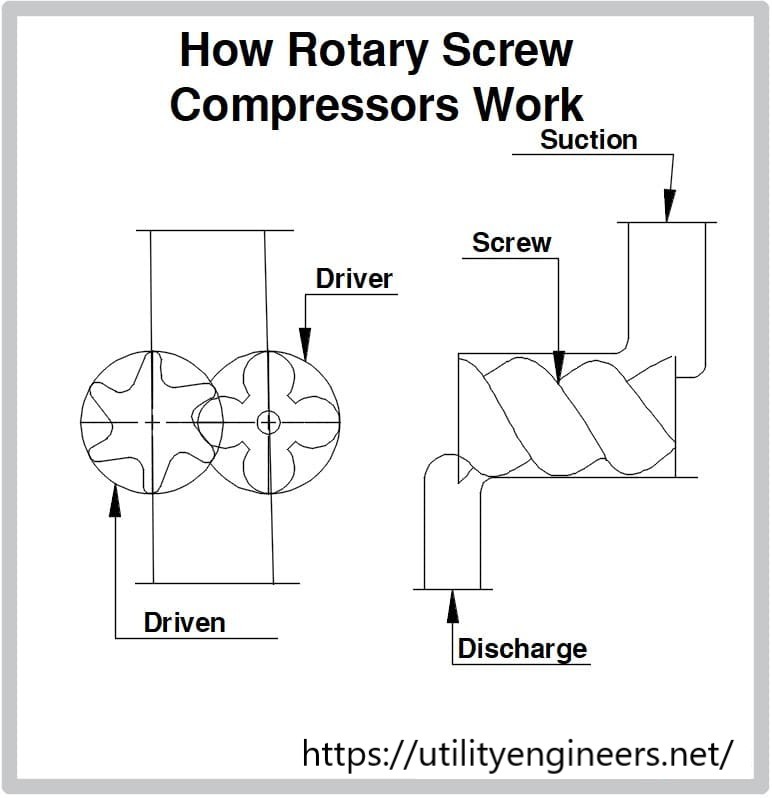
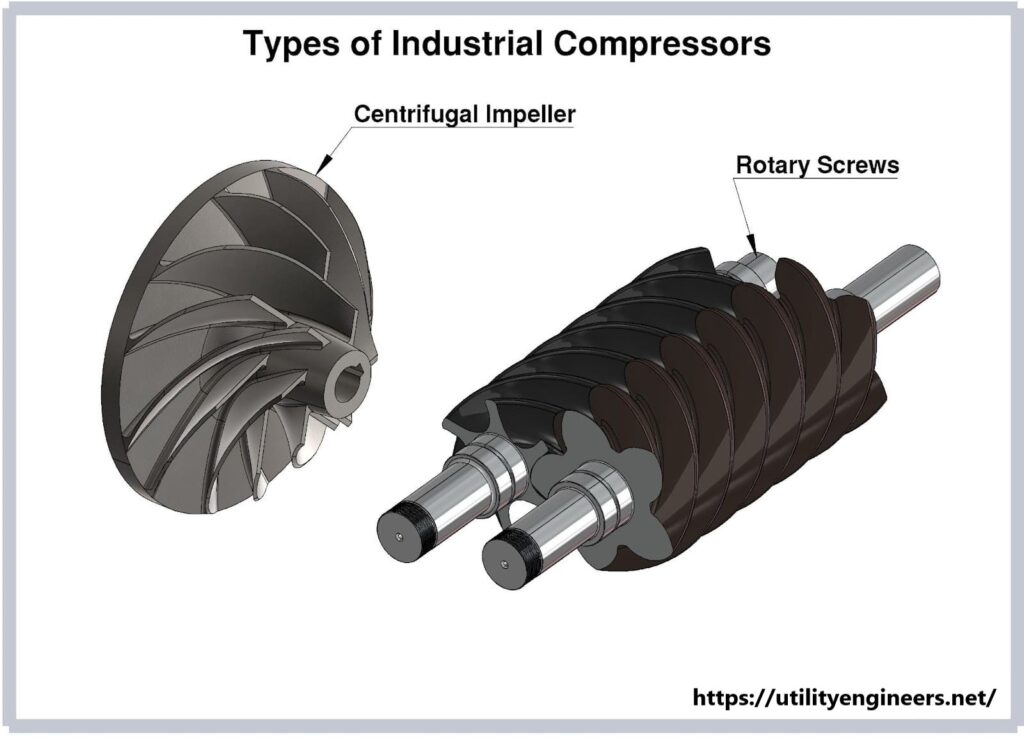
Rotary helical screw compressors are among the most widely used industrial air compressors because of their high efficiency and ability to operate continuously at a 100% duty cycle. These compressors use two intermeshing helical rotors housed within a twin-bore casing to compress air. As air enters through the inlet, it becomes trapped between the male and female rotors and is gradually compressed as the chamber volume decreases. In oil-flooded models, lubricant is injected to cool, seal, and lubricate the compression process, improving efficiency, reliability, and service life.
Rotary screw compressors are designed for quiet, low-vibration operation and are available in oil-flooded, oil-free, and water-injected configurations to meet different industrial requirements. They are widely used in food processing, medical air systems, electronics manufacturing, automotive plants, construction sites, warehouses, and large industrial facilities. Their compact design and simple installation also make them suitable for mobile and trailer-mounted applications.
Key benefits of rotary screw compressors include:
- Continuous, pulse-free compressed air for uninterrupted operations
- Long service life with minimal maintenance requirements
- High airflow capacity for demanding industrial applications
- Low vibration and quiet operation
- Energy-efficient performance that reduces operating costs
- Smart controls and monitoring systems for improved system management
Because of their reliability, efficiency, and continuous operation, rotary screw compressors have become the preferred choice for heavy-duty industrial environments.
Rotary Scroll Compressors
Rotary scroll compressors use a fixed scroll and an orbiting spiral scroll to compress air smoothly and efficiently. As the orbiting scroll moves, air is trapped and compressed toward the center, producing a continuous, pulse-free airflow. With fewer moving parts than most other compressor types, scroll compressors offer high reliability, quiet operation, and low maintenance requirements.
Available in both oil-free and lubricated models, rotary scroll compressors are widely used in dental clinics, hospitals, laboratories, electronics manufacturing, and other industries requiring clean, dry compressed air. Their compact size, energy efficiency, and low noise levels make them an excellent solution for applications where air purity and dependable performance are essential.
Selecting the right industrial air compressor depends on several factors, including required air quality, operating pressure, duty cycle, energy efficiency, installation space, and overall lifecycle cost. Partnering with an experienced industrial air compressor supplier ensures the right compressor selection, professional system design, preventive maintenance support, and genuine spare parts to maximize system performance and long-term reliability.