
Vacuum pumps sit quietly behind an enormous share of modern industry, from packaging lines to particle accelerators. But not all vacuum pumps work the same way, and choosing the wrong one for a process can mean poor performance, high energy bills, or contaminated output. This guide breaks down how vacuum pumps actually work, the different vacuum ranges they operate in, and the major pump technologies you’re likely to encounter.
What Is a Vacuum Pump?
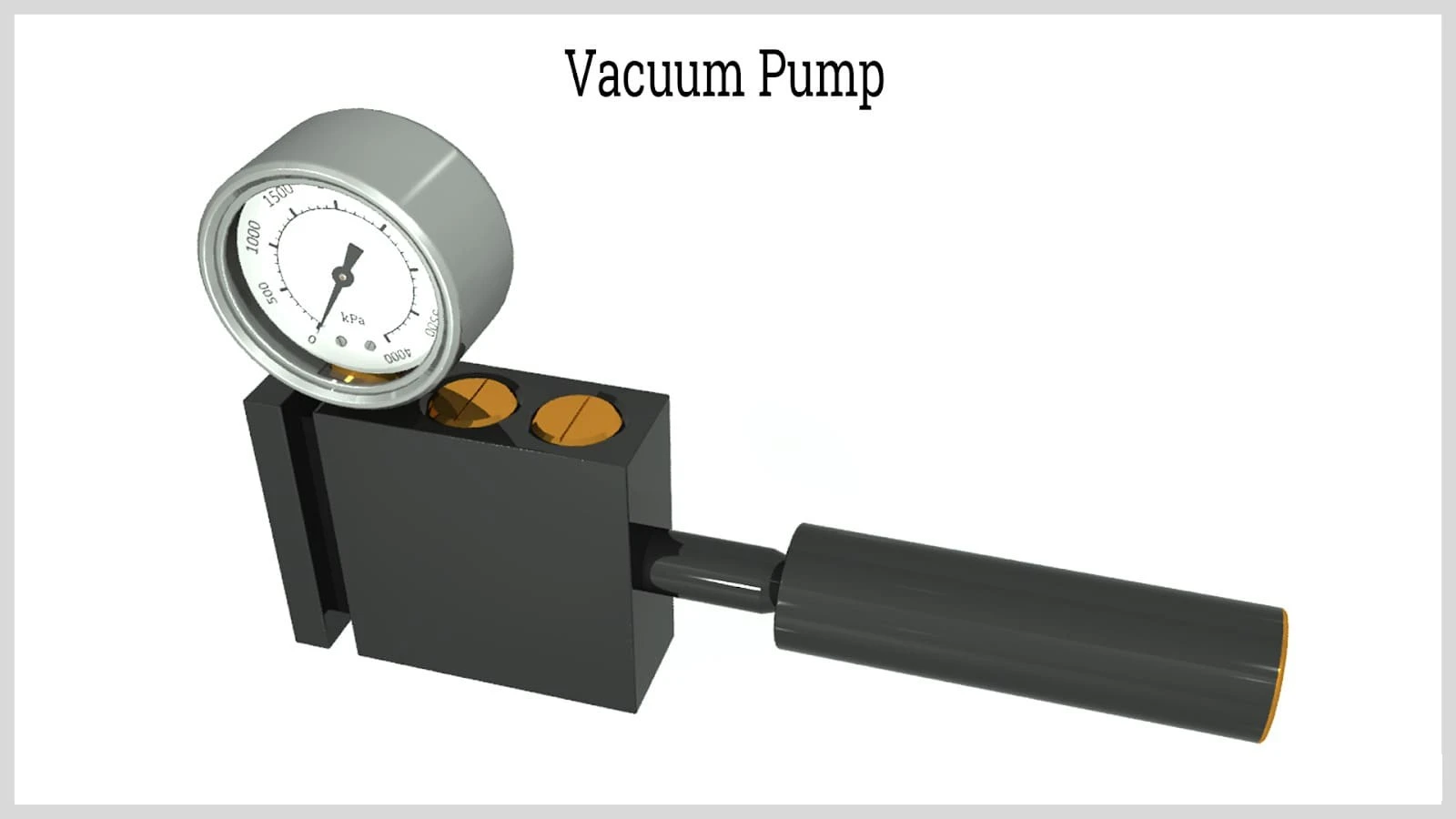
A vacuum pump is a device built to create a partial or low-pressure environment by pulling gas or air molecules out of a sealed space. In industrial systems, this is essential wherever a process needs controlled pressure, stable airflow, or contamination-free conditions.
It’s worth clarifying what “vacuum” actually means here. A vacuum simply refers to pressure that’s lower than the surrounding atmosphere or an adjacent system — it isn’t the same as an absolute vacuum, a theoretical state of zero pressure with no gas particles at all.
Atmospheric pressure plays a central role in how vacuum pumps perform. Because gas naturally moves from high-pressure areas toward low-pressure ones, atmospheric pressure directly affects how hard a pump has to work — and that effort changes with altitude, temperature, humidity, and even leaks in the system. Higher atmospheric pressure generally makes a vacuum pump more efficient, which is why elevation and environmental conditions can noticeably affect both performance and running costs.
When engineers select a pump for a given process, they typically weigh pumping speed, ultimate pressure, flow rate, duty cycle, maintenance needs, and energy consumption — all of which shape total cost of ownership.
Two Ways to Create a Vacuum
There are two fundamental approaches to generating a vacuum:
- Gas transfer — gas is physically moved out of the chamber. This includes:
- Positive displacement pumps, which expand and contract a sealed chamber, using valves to draw in and expel gas
- Momentum transfer pumps, which accelerate gas molecules to push them along
- Entrapment — gas molecules are captured rather than expelled, through condensation, sublimation, adsorption, or ionization
Each approach suits different pressure ranges and process requirements, which brings us to vacuum ranges themselves.
Understanding Vacuum Ranges
Not all vacuum is created equal. Vacuum levels are classified according to the absolute pressure remaining in a sealed system — essentially, how many gas molecules (mostly nitrogen, oxygen, and water vapor) are still present.
Vacuum Range | Absolute Pressure (Pa) |
Atmospheric | 101,325 |
Low Vacuum (Rough, Coarse) | 1.01 × 10⁵ to 3.33 × 10³ |
Medium Vacuum | 3.33 × 10³ to 1 × 10⁻¹ |
High Vacuum | 1 × 10⁻¹ to 1 × 10⁻⁷ |
Ultra-High Vacuum | 1 × 10⁻⁷ to 1 × 10⁻¹⁰ |
The lower the pressure a system needs to reach, the harder the pump has to work — fewer molecules remain, and each one becomes progressively more difficult to remove. This is why different vacuum ranges call for entirely different pump technologies:
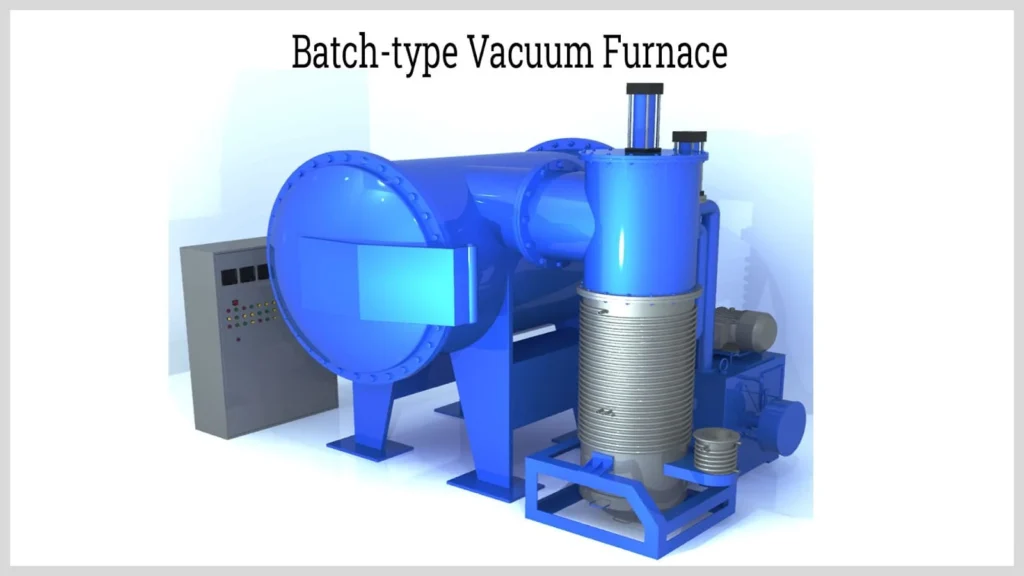
- Low and medium vacuum are typically handled by positive displacement pumps — rotary vane, diaphragm, and piston designs. These cover most everyday industrial applications: packaging, degassing, filtration, vacuum grippers, sandblasting, and vacuum furnaces.
- High and ultra-high vacuum require momentum transfer pumps (turbomolecular and diffusion pumps) or, for the most demanding applications, entrapment pumps like cryopumps and ion getter pumps. These ranges matter most in specialized fields — electron microscopy, mass spectrometry, semiconductor manufacturing, and space simulation.
Choosing the right range means matching your target pressure to your actual process needs, expected contaminants, throughput requirements, and long-term energy costs.
Types of Vacuum Pumps and How They Work
To understand why certain pumps suit certain jobs, it helps to know how gas actually behaves at different pressures. Gas flow falls into three regimes:
- Viscous (continuous) flow — occurs at higher pressures, where gas molecules are packed closely and collide frequently with each other
- Transitional flow — an in-between state where molecule-to-molecule and molecule-to-wall collisions happen at similar rates
- Molecular flow — typical of high and ultra-high vacuum, where molecules rarely collide with each other and mostly interact with chamber walls
Positive displacement pumps handle viscous flow well but lose effectiveness as conditions shift toward molecular flow — which is why high-vacuum systems often combine a roughing pump with a high-vacuum pump working in sequence.
Positive Displacement Vacuum Pumps
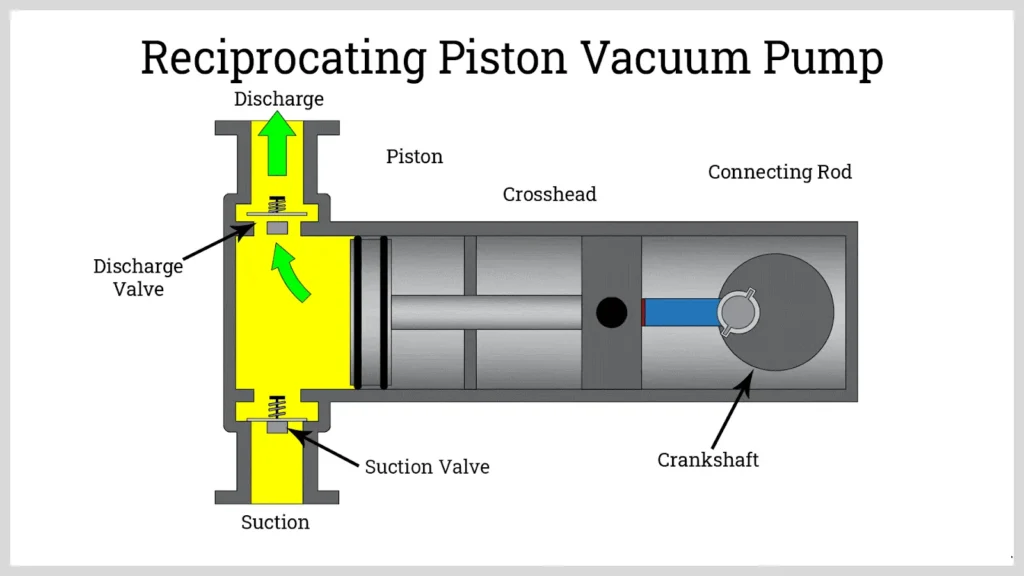
These pumps work by repeatedly expanding and compressing a sealed chamber, with one-way valves controlling intake and exhaust. As the chamber expands, gas is drawn in; as it contracts, the gas is pushed out. This category splits into two broad motion types:
Reciprocating pumps move gas through back-and-forth motion:
- Piston pumps — a crankshaft-driven piston inside a cylinder, valued for durability and efficiency in demanding applications
- Plunger pumps — similar to piston pumps but built for high differential pressures or aggressive process gases
- Diaphragm pumps — oil-free designs using a flexible membrane, ideal for handling corrosive or hazardous gases in labs and filtration systems
Reciprocating pumps can also be single-acting (working one side of the piston per stroke) or double-acting (working both sides simultaneously for better throughput), and multiple units can run in parallel to smooth out pulsation.
Rotary pumps generate vacuum through continuous rotation, delivering smoother, less pulsating flow:
- Rotary vane pumps — vanes housed in an offset rotor create cyclically expanding and contracting chambers; can be oil-sealed for deeper vacuum or dry for cleaner environments
- Liquid ring pumps — use a rotating assembly and a sealing liquid (usually water or oil), making them well-suited to wet or moist processes like vapor recovery and solvent extraction
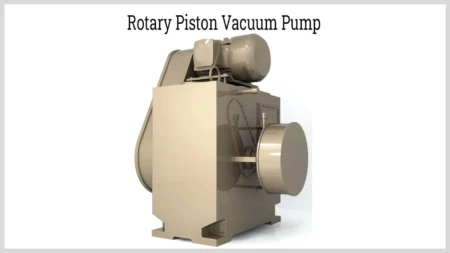
- Rotary piston pumps — an eccentric piston and slide valve system used in demanding processes like plastic degassing and transformer drying
- Screw pumps — intermeshing screws provide oil-free, contamination-resistant operation suitable for clean-room environments
- Gear pumps — compact, precision-machined designs for small-volume, high-pressure applications like instrument calibration
- Lobe (Roots) pumps — intermeshing lobes with no internal contact, delivering high flow rates for large-scale roughing and booster applications
- Scroll pumps — orbiting scrolls produce ultra-smooth, oil-free vacuum favored in semiconductor manufacturing and medical vacuum supply
Momentum Transfer Pumps
Rather than mechanically displacing gas, momentum transfer (or molecular) pumps impart kinetic energy directly to gas molecules, propelling them along through repeated collisions or fluid jets. They operate in the molecular flow regime, making them essential for high and ultra-high vacuum work in surface science, thin-film deposition, and semiconductor manufacturing.
- Turbomolecular pumps spin rotor and stator blades at extremely high speeds — sometimes over 60,000 rpm — to drive gas molecules toward the exhaust, delivering exceptionally clean vacuum.
- Diffusion pumps use vaporized oil or steam jets to transfer momentum to gas molecules. They’re valued for high throughput and low cost, though oil traps or baffles are often needed to prevent contamination.
Because these pumps need very low inlet pressures to function, they’re almost always backed by a roughing pump.
Entrapment Vacuum Pumps
Entrapment pumps don’t expel gas at all — they trap it, physically or chemically, on internal surfaces. With no moving parts, they’re low-maintenance but need periodic reconditioning once their capturing medium is saturated.
- Cryogenic pumps freeze incoming gases onto surfaces cooled below 10 K, ideal for ultra-pure applications like accelerator beamlines and thin-film deposition.
- Sorption pumps use high-surface-area materials like molecular sieves or activated charcoal to adsorb gas, often paired with cryopumps.
- Sputter ion (getter) pumps ionize residual gas and bombard a titanium cathode, permanently capturing molecules — a key technology for ultra-high vacuum work.
- Titanium sublimation pumps heat a titanium filament to coat chamber surfaces with reactive vapor that chemically binds residual gas.
One limitation across entrapment pumps: they struggle with light gases like hydrogen or helium, so many ultra-high vacuum systems combine several pump types.
Wet vs. Dry Vacuum Pumps
Beyond their mechanical operating principle, vacuum pumps are also classified by how they’re lubricated.
Wet vacuum pumps
use oil as their primary lubricant, supplied by an auxiliary system that also handles heat rejection and filtration. They’re generally less expensive, but the tradeoff is that oil comes into contact with the process gas, requiring a downstream oil separator.
Dry vacuum pumps
skip liquid lubrication entirely, instead using solid lubricants like graphite, PTFE, or molybdenum disulfide to prevent metal-to-metal contact. Water-cooling jackets manage heat instead. Dry pumps cost more upfront but deliver contamination-free pumping and typically need less maintenance over time.
Vacuum Ejectors and Venturi Pumps
Not every vacuum solution relies on moving parts. Vacuum ejectors and Venturi pumps use the Venturi effect — a direct application of Bernoulli’s principle, where increasing a fluid’s velocity decreases its pressure.
Vacuum ejectors use compressed air (not electricity) to force high-pressure air through a constricted nozzle, creating a low-pressure zone that draws in outside air. Their advantages include:
- No moving parts, meaning high reliability and minimal maintenance
- Vacuum can be switched on and off to save compressed air
- Compact and lightweight, so they can sit close to the point of use
- No heat generation — they actually cool as they run
- Quiet operation with a silencer (under 80 decibels)
- Among the least expensive vacuum pump options available
The main drawback is that the motive air mixes with the evacuated fluid, so recovering that fluid requires extra separation equipment. Ejectors are common in power plants, petrochemical facilities, and water treatment operations.
Venturi vacuum pumps work similarly, restricting flow through a nozzle to speed up fluid and drop pressure. Like ejectors, they need no external power source, generate no heat, and can be tuned for specific applications by adjusting nozzle diameter. They’re often used alongside conventional vacuum pumps to help transport materials over longer distances.
Choosing the Right Vacuum Pump
With so many pump types available, selection comes down to a handful of core questions: What ultimate pressure does your process need? What flow rate and pumping speed? What gases or contaminants will the pump encounter? And what’s the realistic lifecycle cost once you factor in energy use and maintenance?
Getting these answers right — and matching them to the correct pump category, whether positive displacement, momentum transfer, entrapment, or Venturi-based — is what separates a vacuum system that performs reliably for years from one that constantly needs troubleshooting.
Key Takeaways
- A vacuum pump removes gas molecules from a sealed chamber to create a lower-pressure environment relative to the surrounding atmosphere.
- Vacuum ranges — low, medium, high, and ultra-high — are defined by absolute pressure and each require different pump technologies.
- Vacuum pumping principles fall into two categories: gas transfer (positive displacement and momentum transfer) and entrapment.
- Pumps are also classified as wet or dry, depending on their lubrication method, which affects contamination risk and maintenance needs.
- Venturi-based ejectors offer a simple, moving-part-free alternative powered by compressed air rather than electricity.