
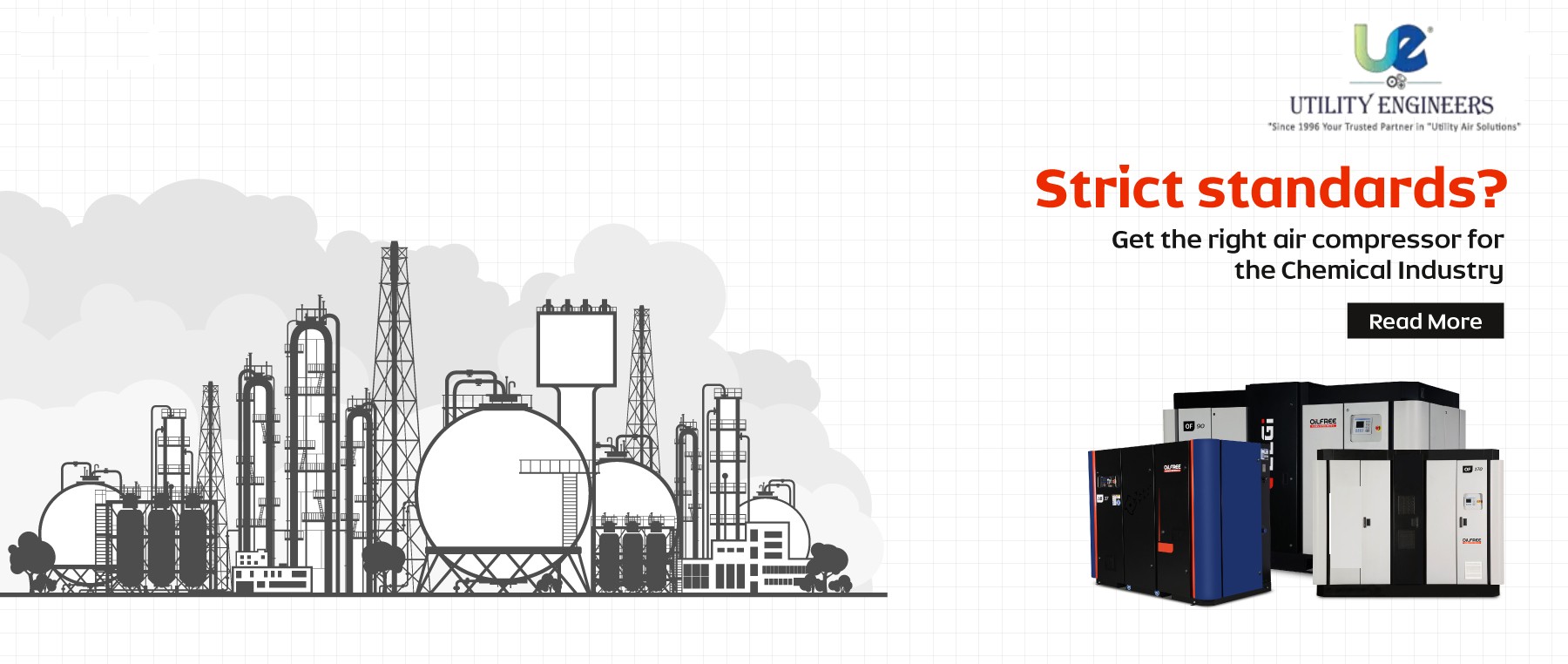
India is the world’s fourth-largest agrochemical producer, after the United States, Japan and China, with over 80,000 commercial products. It contributes around 16% of global dyestuffs and dye intermediates output. Excluding pharmaceuticals, it ranks 14th in exports and 8th in imports. The sector spans bulk chemicals, specialty chemicals, agrochemicals, petrochemicals, polymers and fertilizers.
With a projected CAGR of 9.3% and an expected value of US$ 304 billion by 2025, the industry is a major contributor to the economy. Growth at this scale depends on reliable utilities, and clean compressed air is among the most critical of them.
Why is clean compressed air essential in chemical plants?
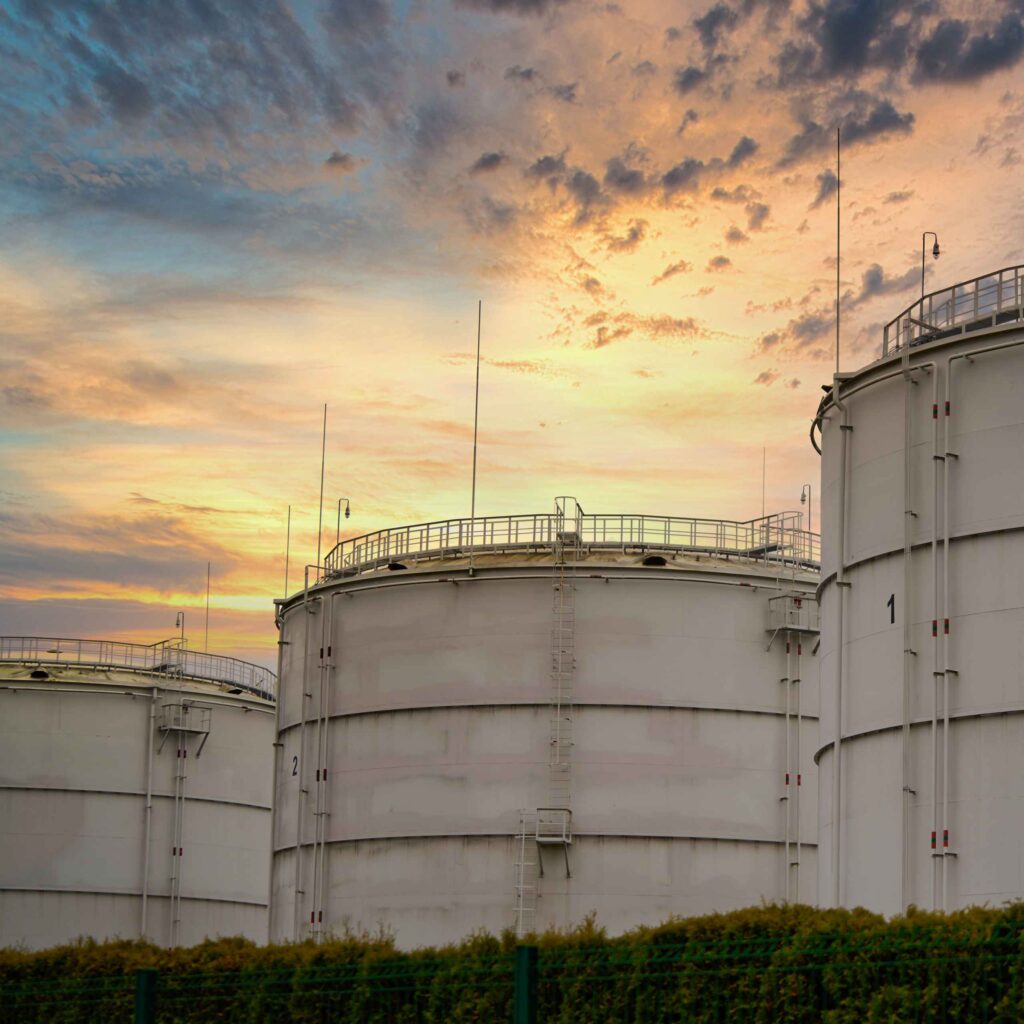
Chemical and petrochemical operations work under strict safety and quality regulations. Manufacturers must protect product purity and enforce tight quality control to supply high-grade chemicals. The process often involves toxic, explosive, corrosive or unstable materials, so the compressed air must be dry and free from dust and oil carryover to prevent unintended reactions.
In many applications, compressed air directly contacts the product. Oil vapor or particulates in the air line can spoil entire batches and cause heavy production losses. That makes selecting the right compressor and air treatment system a decision that directly affects safety, quality and cost.
Key uses of compressed air in the chemical industry:
- Process air – Air in direct contact with the product, used for cleaning, conveying and inflation.
- Control valves and cylinders – Pneumatic valves and actuators across the plant run on compressed air.
- Material handling – Pneumatic pumping systems lower explosion risk in hazardous, volatile areas.
- Nitrogen generation – Compressed air is the feed for on-site nitrogen units, a vital gas in chemical processing.
- Air curtains – Air flowing through curtain systems isolates zones and maintains clean, safe working areas.
- Product drying – In suitable processes, air is introduced to speed up drying.
- Fermentation and aeration – Compressed air provides oxygen to bacteria during fermentation and oxidation.
Utility Engineers air compressor solutions for the chemical industry
Utility Engineers supplies compressed air systems designed for the demands of chemical applications. Our solutions focus on dependable safety features, consistent air quality that meets industry standards, energy-efficient operation and manageable maintenance costs. Explore our range of oil-free compressors, lubricated screw compressors and related equipment.
Whether you need clean, dry or oil-free air, we can configure a system to your specific process requirements. Talk to our compressed air specialists to find the right solution for your plant.