
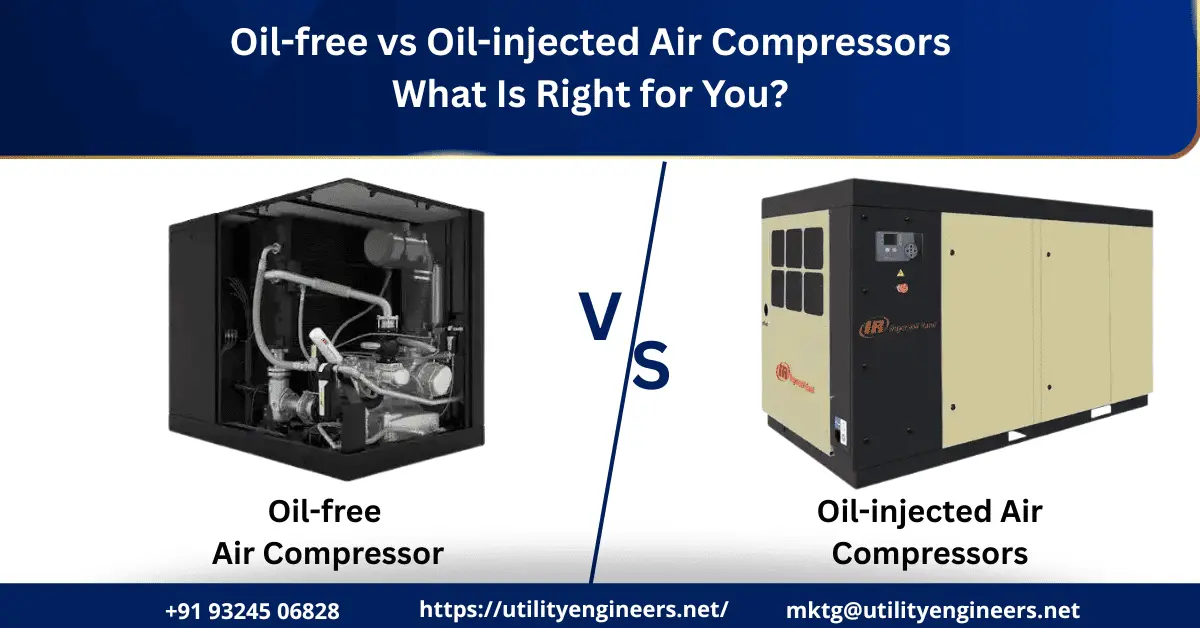
Selecting the right air compressor is a crucial decision for any business that relies on compressed air for daily operations. Whether you operate a manufacturing plant, food processing facility, automotive workshop, or pharmaceutical unit, choosing between an oil-free and an oil-injected air compressor can directly impact productivity, maintenance costs, and product quality.
While both compressor types are designed to deliver reliable compressed air, they differ significantly in terms of lubrication, maintenance requirements, operating costs, and suitable applications. Understanding these differences will help you invest in the right equipment and maximize long-term performance.
What Is an Oil-Free Air Compressor?
An oil-free air compressor is engineered to produce clean compressed air without introducing lubricating oil into the compression chamber. Instead of oil, these compressors use specially coated components and advanced engineering designs to minimize friction while maintaining high performance.
Although the compression chamber remains completely oil-free, the gearbox and bearings still require lubrication for smooth operation. The lubricating oil stays isolated from the compressed air path, ensuring contamination-free air delivery.
Key Benefits
- Produces clean, high-quality compressed air
- Eliminates the risk of oil contamination
- Requires fewer filtration components
- Lower routine maintenance requirements
- Environmentally friendly operation
- Suitable for critical industrial applications
What Is an Oil-Injected Air Compressor?
Oil-injected air compressors use lubricating oil inside the compression chamber to cool, seal, and lubricate moving components. The oil helps reduce wear, improves efficiency, and extends the life of the compressor.
After compression, oil separation systems remove most of the oil before the compressed air reaches downstream equipment. However, trace amounts of oil may still remain, making these compressors less suitable for industries requiring ultra-clean air.
Key Benefits
- Lower initial investment
- Excellent durability for heavy-duty applications
- Reliable continuous operation
- High efficiency under demanding conditions
- Proven technology for industrial manufacturing
Oil-Free vs. Oil-Injected Air Compressors: Key Differences
Feature | Oil-Free Compressor | Oil-Injected Compressor |
Air Quality | 100% oil-free compressed air | Small traces of oil may remain |
Lubrication | No oil in compression chamber | Oil lubricates compression element |
Maintenance | Lower maintenance | Regular oil and filter changes required |
Operating Cost | Lower long-term cost | Higher maintenance expenses |
Initial Investment | Higher | Lower |
Environmental Impact | Reduced waste oil generation | Requires oil disposal |
Best For | Sensitive industries | General industrial applications |
Understanding Maintenance Requirements
Maintenance plays an important role in compressor performance and lifespan.
Oil-Free Compressors
Oil-free compressors eliminate the need for:
- Oil separator replacement
- Frequent oil changes
- Oil filter maintenance
- Disposal of used lubricants
This results in lower service costs and reduced downtime.
Oil-Injected Compressors
Oil-injected models require scheduled maintenance including:
- Oil replacement
- Oil filter replacement
- Separator replacement
- Lubrication system cleaning
Although maintenance costs are higher, these compressors provide excellent durability for demanding industrial environments.
Which Industries Benefit from Oil-Free Compressors?
Oil-free compressed air is essential whenever air quality directly affects products or processes.
Common Applications
- Food and beverage processing
- Pharmaceutical manufacturing
- Electronics production
- Chemical processing
- Medical equipment manufacturing
- Aerospace applications
- Fertilizer plants
- Clean-room environments
These industries require contamination-free compressed air to meet quality standards and regulatory requirements.
Which Industries Prefer Oil-Injected Compressors?
Oil-injected compressors remain the preferred choice for many heavy-duty industrial operations where ultra-clean air is not essential.
Common Applications
- Automotive workshops
- Metal fabrication
- Construction sites
- Mining operations
- Plastic manufacturing
- Cement plants
- General engineering industries
- Oil and gas facilities
These businesses benefit from the lower purchase cost and robust performance of oil-injected compressors.
Energy Efficiency and Long-Term Savings
Modern compressor technology has significantly improved energy efficiency.
Variable Speed Drive (VSD) compressors automatically adjust motor speed according to air demand, reducing electricity consumption and lowering operating costs.
For facilities with fluctuating air requirements, advanced hybrid compressor systems combine fixed-speed stability with variable-speed flexibility, delivering reliable performance while minimizing energy waste.
Choosing an energy-efficient compressor can reduce power consumption, improve productivity, and provide substantial savings over the equipment’s lifetime.
Factors to Consider Before Choosing
Before investing in an air compressor, evaluate the following:
Air Quality Requirements
If your production process cannot tolerate oil contamination, an oil-free compressor is the best option.
Budget -: Oil-injected compressors generally cost less upfront, while oil-free models often provide lower operating expenses over time.
Maintenance Resources -: Businesses looking to reduce maintenance downtime may benefit from oil-free technology.
Energy Consumption -: Selecting an energy-efficient compressor can significantly reduce electricity costs over the long term.
Industry Standards -: Many industries require compliance with strict air quality standards, making oil-free compressors the preferred choice.
Oil-Free vs. Oil-Injected: Which One Should You Choose?
The ideal compressor depends entirely on your operational requirements.
Choose an oil-free air compressor if:
- Clean compressed air is essential
- Product quality depends on contamination-free air
- You want lower routine maintenance
- Environmental sustainability is a priority
Choose an oil-injected air compressor if:
- Initial investment is a major concern
- Your application does not require oil-free air
- You need reliable performance for heavy industrial operations
- You have a maintenance schedule in place
Conclusion
Both oil-free and oil-injected air compressors offer unique advantages. Oil-free compressors provide superior air quality, lower maintenance, and greater environmental benefits, making them ideal for industries with strict quality requirements. Oil-injected compressors, on the other hand, deliver dependable performance and cost-effective operation for general industrial applications.
By carefully evaluating your air quality needs, operating costs, maintenance capabilities, and production requirements, you can select a compressor that improves efficiency, reduces downtime, and supports long-term business growth.