
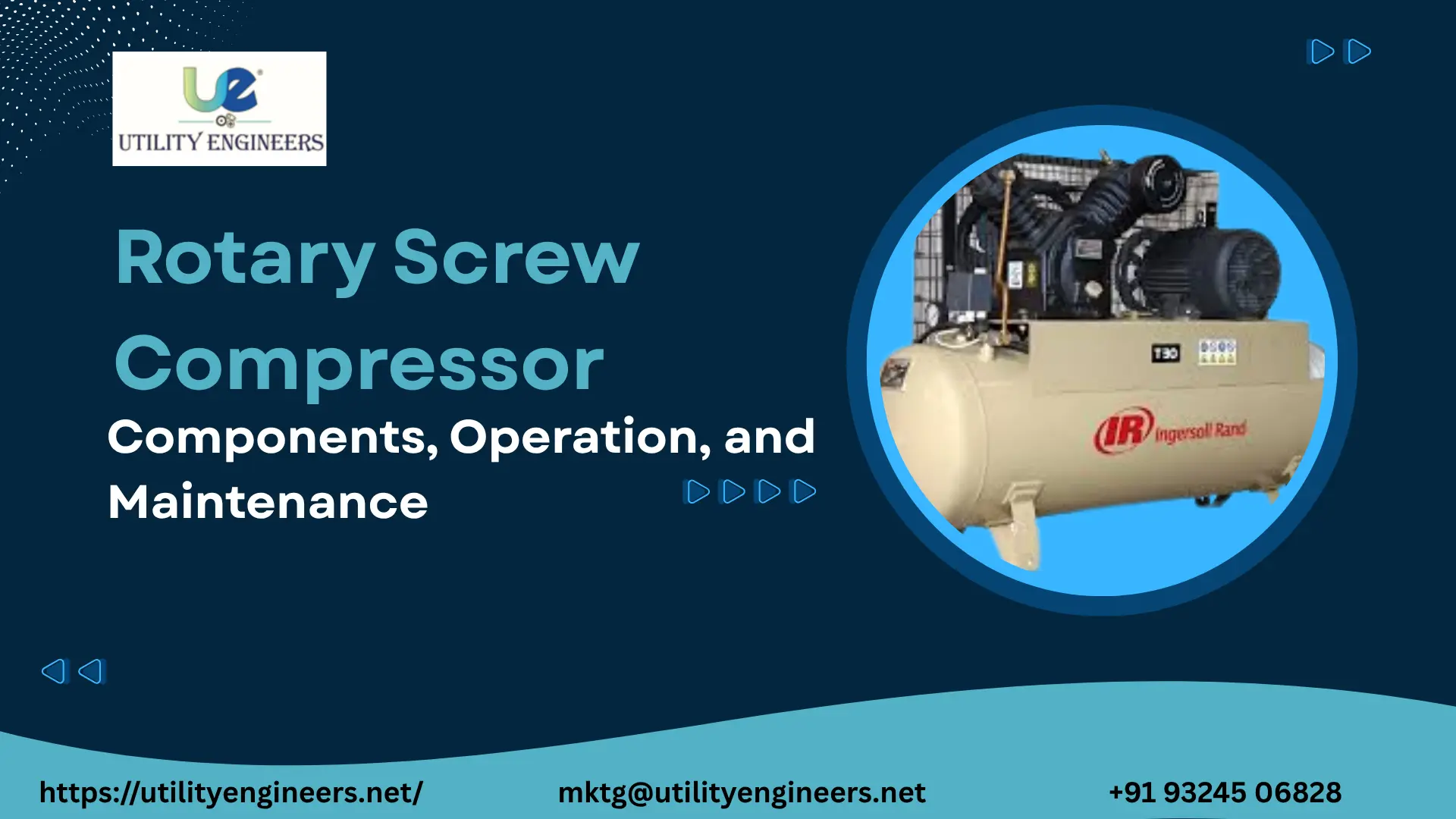
A rotary screw compressor is one of the most reliable and efficient compressed air systems used across manufacturing, automotive, food processing, pharmaceuticals, and many other industries. Its continuous-duty design, high efficiency, and low maintenance requirements make it the preferred choice for businesses that rely on a constant supply of compressed air.
What essential components make up a rotary screw compressor?
Understanding the main rotary screw air compressor components helps you choose the right machine and maintain it properly throughout its operating life. Below are the most important parts found in a standard screw compressor.
1. Inlet Air Filter : The inlet air filter is positioned at the compressor intake where ambient air enters the machine. It removes dust, dirt, and airborne contaminants before they reach the compression chamber, protecting internal components from premature wear.
2. Suction Valve (Load/Unload Valve) : The suction valve regulates airflow into the compressor. It opens during the loading cycle when air demand increases and closes during unloading once the desired pressure is reached, improving energy efficiency.
3. Rotary Screw Element : The rotary screw element is the heart of the compressor. It consists of two precision-machined interlocking rotors that compress incoming air as they rotate together inside the compression chamber.
4. Compression Chamber : The compression chamber houses the rotary screw element and provides the enclosed space where air compression takes place. Multi-stage compressors may include multiple chambers for higher pressure applications.
5. Bearings : High-quality roller and ball bearings support the rotors, minimize friction, ensure smooth rotation, and maintain proper rotor alignment during operation.
6. Oil Filter : In oil-injected rotary screw compressors, the oil filter removes dirt, carbon particles, and contaminants from the lubricant, ensuring clean oil circulation for cooling and lubrication.
7. Separator Vessel : The separator vessel stores compressed air and separates lubricant from the compressed air stream. It also maintains minimum pressure inside the system to ensure proper lubrication.
8. Oil Separator Element : The oil separator removes fine oil particles from compressed air before it exits the compressor, ensuring low oil carryover and clean compressed air delivery.
9. Gaskets and Seals : Gaskets and seals prevent air and oil leaks throughout the compressor. They maintain system pressure while protecting critical internal components.
10. Non-Return (Check) Valve : The non-return valve prevents compressed air from flowing back into the compressor when the machine stops or unloads, protecting downstream equipment.
11. Compressor Motor : The electric motor powers the rotary screw element and drives the complete compression process. Motor performance directly affects compressor efficiency.
12. Compressor Controller (System Control) : The controller manages compressor operation, pressure settings, loading and unloading cycles, fault monitoring, and maintenance reminders through an intuitive control panel.
13. Discharge Valve : The discharge valve releases compressed air only after sufficient pressure has been generated inside the compression chamber while maintaining minimum operating pressure.
14. Aftercooler : An aftercooler reduces compressed air temperature after compression. It may use either air cooling or water cooling depending on the compressor design and installation requirements.
15. Water Separator : Installed after the aftercooler, the water separator removes condensed moisture from compressed air to deliver cleaner, drier air to the air system.
How do rotary screw compressor parts work?
Knowing how each rotary screw compressor component works makes troubleshooting easier and helps you perform preventive maintenance before failures occur.
1. Inlet Air Filter
The inlet air filter acts as the compressor’s first line of defense against airborne contaminants. It prevents dust, dirt, pollen, and other particles from entering the compression chamber.A clogged filter restricts airflow, reduces compressor efficiency, increases energy consumption, and shortens the life of the rotary screw element. Regular inspection and replacement ensure maximum airflow and reliable performance.
2. Rotary Screw Element
The rotary screw element contains two helical rotors—one male and one female—that rotate together with extremely tight clearances.As air enters the element, it becomes trapped between the rotor lobes. As the rotors continue turning, the trapped air volume decreases, increasing pressure until compressed air reaches the discharge portThis continuous compression process makes the rotary screw air compressor highly efficient for industrial applications requiring uninterrupted compressed air.
3. Oil Filter
The oil filter continuously cleans compressor lubricant by removing contaminants that could damage bearings, rotors, and other moving components.Clean oil improves lubrication, reduces wear, maintains proper operating temperature, and extends compressor service life. Most modern oil filters include bypass valves that ensure oil circulation even if the filter becomes partially clogged.
4. Bearings
Bearings support the rotating shafts and maintain precise rotor alignment.Radial bearings support rotational movement while thrust bearings absorb axial forces created during compression. Properly lubricated bearings minimize vibration, reduce mechanical wear, and improve compressor reliability.
5. Suction Valve
The suction valve controls airflow entering the compressor according to system demand.When air demand increases, the valve opens fully to maximize airflow. Once system pressure reaches the preset value, the valve closes to unload the compressor, reducing unnecessary power consumption.Different compressor designs may use poppet, ring, or plate-style suction valves.
6. Discharge Valve
After compression is complete, the discharge valve allows compressed air to exit the compression chamber.It ensures stable system pressure while preventing pressure loss during operation. Regular inspection helps prevent leaks and maintains compressor efficiency.
7. Compressor Motor
The electric motor supplies power to the rotary screw element through either direct drive or belt drive systems.Choosing the correct motor size is essential. Oversized motors may waste energy, while undersized motors can overload under demanding operating conditions.Routine motor inspections help identify overheating, bearing wear, electrical issues, and reduced efficiency.
8. System Controller
Modern rotary screw compressors use intelligent electronic controllers to automate compressor operation.
The controller monitors:
- System pressure
- Motor temperature
- Operating hours
- Load/unload cycles
- Fault alarms
- Maintenance schedules
- Energy consumption
Advanced controllers optimize compressor performance while reducing operating costs.
9.Oil Separator
Oil-injected compressors rely on an oil separator to remove lubricant from compressed air before delivery.As compressed air enters the separator vessel, most oil droplets settle immediately. The remaining fine oil mist passes through the separator element, where microscopic oil particles are removed before clean compressed air exits the compressor.A worn separator increases oil carryover, pressure drop, and energy consumption.
10. Gaskets and Seals
Gaskets and seals maintain airtight and oil-tight connections throughout the compressor.These components prevent leakage around bearings, oil passages, separator vessels, and compression chambers while helping maintain proper operating pressure.Replacing worn seals during scheduled maintenance prevents efficiency losses and expensive breakdowns.
How to maintain rotary screw air compressor parts?
Regular maintenance keeps your rotary screw compressor operating efficiently while reducing downtime and repair costs. Preventive servicing also extends the lifespan of major compressor components.
Air Filter Inspection
Inspect the inlet air filter regularly for dirt accumulation.Replace clogged filters immediately to maintain unrestricted airflow, lower energy consumption, and protect the rotary screw element from contamination.
System Controller Testing
Verify that the controller accurately monitors pressure, temperature, operating hours, and fault conditions.Check programmed pressure limits and ensure automatic loading, unloading, and shutdown functions operate correctly.
Oil Filter and Oil Separator Inspection
For oil-injected compressors, monitor oil levels daily and replace oil filters and separator elements according to the manufacturer’s maintenance schedule.Clean lubricant protects bearings, rotors, and internal compressor components from excessive wear.
Rotary Screw Element Inspection
Inspect the rotary screw element for unusual vibration, noise, oil leakage, or reduced air output.Check belt tension (for belt-driven compressors) and ensure rotor alignment remains within recommended tolerances.
Bearing Inspection
Monitor bearings for abnormal vibration, overheating, or unusual sounds.Replacing worn bearings before failure prevents costly damage to the rotary screw element.
Cooling System Maintenance
Clean the aftercooler and cooling surfaces regularly to improve heat transfer.Proper cooling prevents overheating and maintains optimal compressor efficiency.
Leak Detection
Inspect hoses, fittings, seals, and gaskets for air or oil leaks.Even small leaks reduce system efficiency and increase electricity costs over time.
Follow Preventive Maintenance Schedules
Develop a preventive maintenance schedule based on operating hours rather than waiting for failures.
Routine maintenance should
An in-depth compressor system check should be conducted every few weeks to keep the machine’s performance intact for a longer time.