
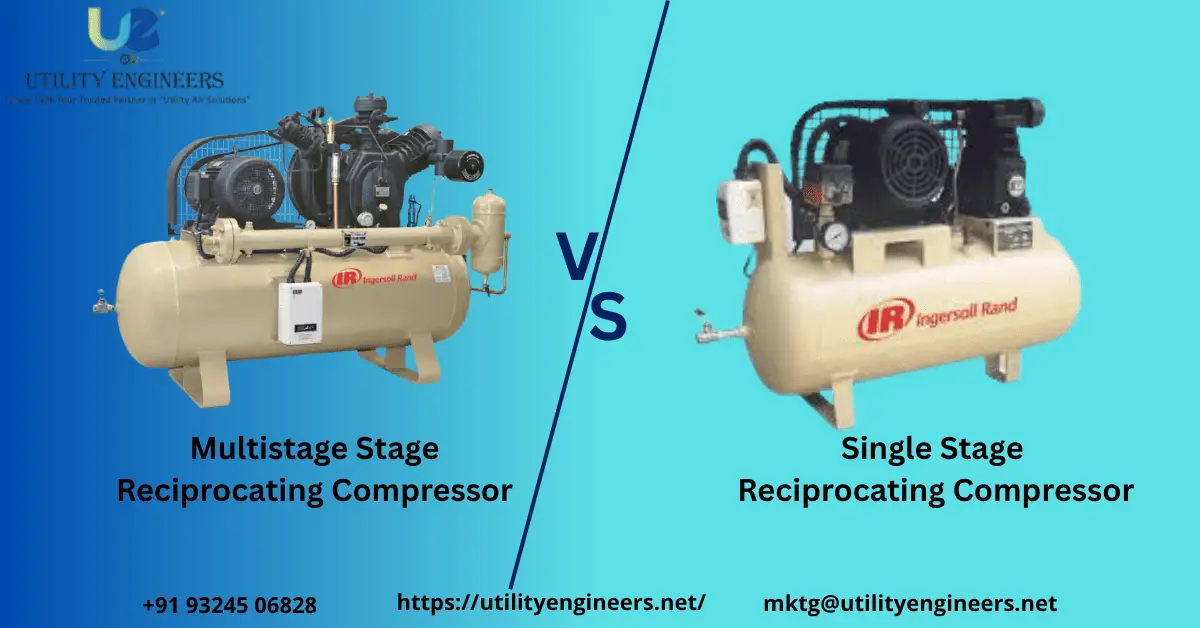
Choosing the right air compressor is essential for improving efficiency, reducing energy costs, and ensuring reliable performance. When comparing Multistage vs Single Stage Reciprocating Compressor, understanding the differences in pressure, efficiency, and applications can help businesses make the best investment.
Both compressor types use pistons to compress air, but their working principles and performance vary significantly. This guide explains the key differences, advantages, and ideal applications of each type.
What Is a Single Stage Reciprocating Compressor?
A single stage reciprocating compressor compresses air in one piston stroke. Air enters the cylinder, is compressed once, and is delivered directly to the storage tank or air system.
Key Features
- Single compression process
- Simple and compact design
- Lower initial investment
- Easy installation and maintenance
- Suitable for low to medium pressure applications
Common Applications
- Automotive workshops
- Small manufacturing units
- Garages
- DIY projects
- Small pneumatic tools
What Is a Multistage Reciprocating Compressor?
A multistage reciprocating compressor compresses air in two or more stages. After the first compression, the air passes through an intercooler before entering the next cylinder for further compression. This process improves efficiency and produces higher pressure.
Key Features
- Multiple compression stages
- Better cooling between stages
- Higher operating pressure
- Improved energy efficiency
- Longer service life for demanding applications
Common Applications
- Chemical plants
- Power generation facilities
- Oil and gas industries
- Heavy manufacturing
- High-pressure pneumatic systems
Multistage vs Single Stage Reciprocating Compressor: Major Differences
| Feature | Single Stage Compressor | Multistage Compressor |
| Compression | One stage | Two or more stages |
| Maximum Pressure | Up to 120–150 PSI | 150 PSI and above |
| Energy Efficiency | Moderate | High |
| Cooling | Basic | Intercooler between stages |
| Initial Cost | Lower | Higher |
| Maintenance | Simple | More advanced |
| Industrial Usage | Light-duty | Heavy-duty continuous operation |
Advantages of Single Stage Reciprocating Compressors
- Affordable purchase price
- Simple construction
- Lower maintenance costs
- Compact size
- Ideal for intermittent use
These compressors are an excellent choice for businesses that do not require high-pressure compressed air.
Advantages of Multistage Reciprocating Compressors
- Higher pressure output
- Better energy efficiency
- Reduced operating temperature
- Improved reliability
- Longer equipment life
- Suitable for continuous industrial operation
Although the initial investment is higher, long-term operating costs are often lower due to improved efficiency.
Which Compressor Is More Energy Efficient?
When discussing Multistage vs Single Stage Reciprocating Compressor, energy efficiency is one of the biggest deciding factors.
Multistage compressors cool the air between compression stages using intercoolers. Cooler air requires less energy for further compression, reducing power consumption and improving overall efficiency.
For industries operating compressors continuously, multistage systems can significantly reduce electricity costs.
Which Compressor Should You Choose?
Choose a Single Stage Reciprocating Compressor if you need:
- Lower upfront cost
- Moderate pressure requirements
- Small workshop operations
- Occasional compressor usage
Choose a Multistage Reciprocating Compressor if you need:
- High-pressure compressed air
- Continuous industrial operation
- Better energy savings
- Maximum performance and reliability
Maintenance Tips
Regardless of compressor type, regular maintenance helps maximize performance.
- Check compressor oil regularly
- Replace air filters on schedule
- Drain condensate from air receivers
- Inspect valves and piston rings
- Monitor operating pressure and temperature
- Keep cooling systems clean
Proper maintenance extends equipment life and minimizes unexpected downtime.
Conclusion
Understanding Multistage vs Single Stage Reciprocating Compressor is essential when selecting the right compressed air solution. Single stage compressors offer a cost-effective option for light-duty applications, while multistage compressors deliver superior efficiency, higher pressure, and better performance for demanding industrial environments.
Businesses that require continuous operation and high-pressure output will benefit from investing in multistage technology, while smaller operations can achieve excellent results with a reliable single stage reciprocating compressor.
FAQ
What is the main difference between multistage and single stage reciprocating compressors?
A single stage compressor compresses air once, whereas a multistage compressor compresses air through multiple cylinders to achieve higher pressure and greater efficiency.
Which compressor is better for industrial applications?
Multistage reciprocating compressors are generally better for industrial applications because they provide higher pressure, improved efficiency, and continuous operation capabilities.
Are multistage compressors more energy efficient?
Yes. Multistage compressors use intercooling between compression stages, reducing power consumption and improving overall efficiency.
Which compressor has lower maintenance costs?
Single stage reciprocating compressors typically have lower maintenance costs due to their simpler design and fewer components.